


Jenn Wilson, Managing Partner, Austin Engineering
Engineering Remote Communication
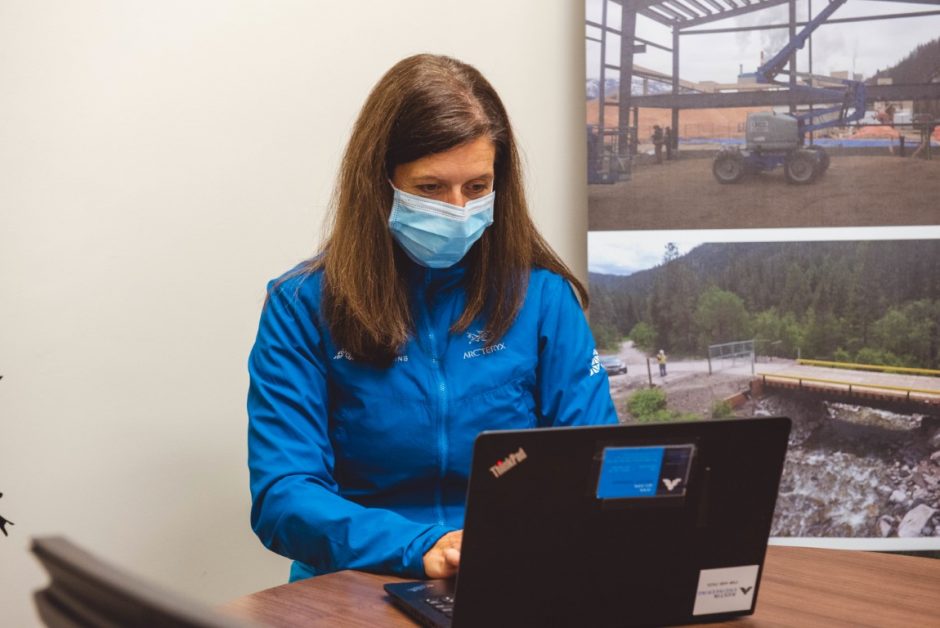
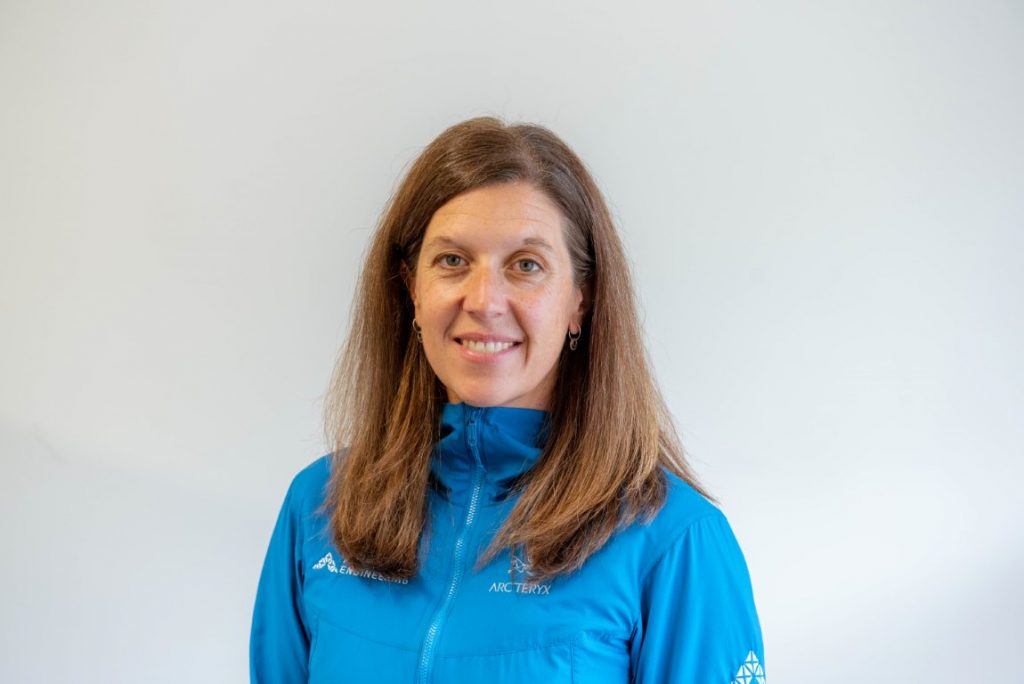
The ability to run a team meeting remotely is a skill that Jenn Wilson has mastered. The Golden, BC resident is the Managing Partner at Trail’s Austin Engineering and is a leading example of a thriving remote-working professional. After a career in communications and public affairs, Jenn pivoted and leveraged her entrepreneurial acumen to begin working for a brand-new engineering firm. Her friends Roger and Mary Austin knew they needed a professional writer’s skills when they launched their company, and Jenn elevated the company’s reputation and best practices in no time. Devoted to continuous learning and providing maximum value, she studied project management and began overseeing projects before more recently taking on the strategic Managing Partner role. Jenn leads with distinction and precision but also incredible warmth; she’s a consummate professional who pours her heart into her work and genuinely values the firm’s exceptional clients. Austin Engineering has built a team culture where diversity and communication are vital attributes, and everyone is encouraged to share their perspective. Together, the team is leading dam safety engineering at an international level, and has been recognized for their advancements, winning the Clean Energy BC Operational Excellence Award in 2017 and 2018; they also continue to present research findings and develop innovations that are changing the engineering landscape. Jenn is immersed in the big picture as she leads Austin Engineering into the future.
What does Austin Engineering specialize in?
Austin Engineering offers civil, structural, hydrotechnical, and geotechnical engineering, but we specialize in dam safety and hydro power. A lot of our work is supporting municipalities, BC Hydro, FortisBC, and dam owners across the province and country. We approach dam safety engineering with our clients in mind by finding them the best, most innovative solutions. We blend a lot of different goals depending on the client and their needs, including helping our dam owners optimize designs, making sure dams are safe, and addressing environmental concerns. That might be innovating a design to reduce concrete or rock blasting in order to reduce costs, or it might be supporting our clients’ sustainability requirements. We also work on fish ladders or park development, always keeping in mind what’s ideal for the community or municipality. We also help clients get feedback from their communities by 3D printing models they can use to better engage stakeholders.
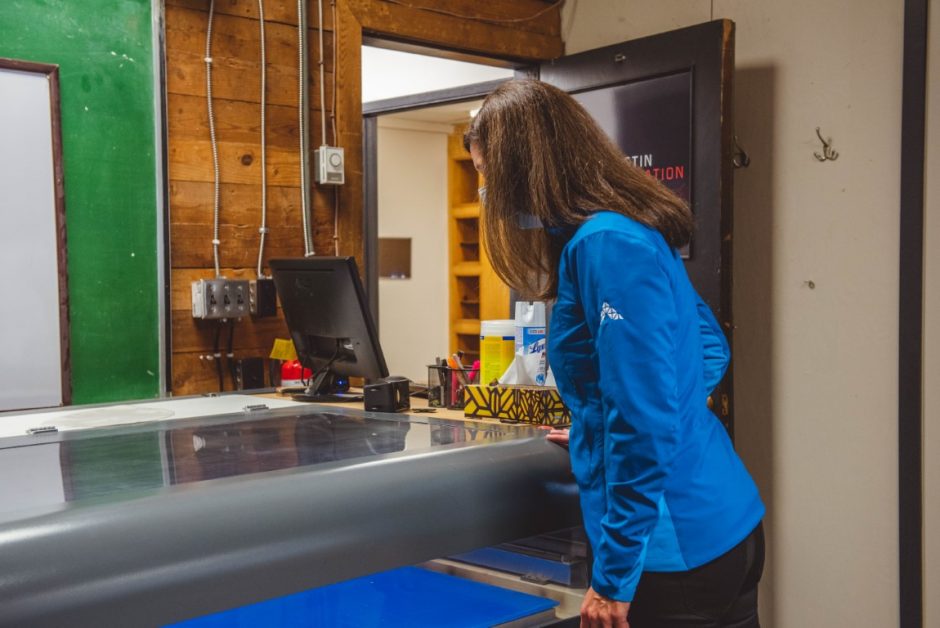
We 3D print dam models at our in-house dedicated hydraulics lab, so if a municipality, for example, wants to build a new dam we could do multiple design versions, 3D print them, and test water flows to see which design has the best flow and function. The models can also help project how we might be able to save on materials. For example, because we modelled Prince Rupert’s Woodworth Dam in our lab, we optimized a design that reduced their cost by $1.5 million. Technology helped us figure out how best to blend some traditional design with the natural on-site setting. On another dam—Idlewild—we were able to reduce the concrete used by 40%, and for Fortis’ Corra Linn Dam our 3D modelling helped their stakeholders prioritize future repairs and designate where they wanted to spend their money.
We also conducted research with industry partners using a shake table that investigated how the Corra Linn and other dams in China and India would respond to earthquakes. We test how they’d react during different earthquake scenarios so we can identify where to best make repairs or shore things up. With approximately 5,000 large dams around the world, many of which are getting 50+ years old and reaching the end of their life span, safety is fundamental.
What makes Austin Engineering different from other engineering firms and where do you fit in?
First of all, our approach to dam safety is pretty unique; then there’s also our team culture. I think we have a really nimble work culture and team that brings their ‘A’ game every day. We are thorough and diligent, and we pride ourselves on our ability to work closely with different groups. We also really value education and sharing best practices with our clients. We have a lot of brilliant minds around the table that bring unique and different perspectives, which is one of the things that makes us such a strong team. We’re really collaborative and receptive; everyone is so open. Our senior engineers obviously have the final stamp on things, but we value different perspectives and skill sets. It’s that culture of support, paired with striving to be the best, that sets us apart.
I recently moved into a Managing Partner role, which has me moving away from working on the projects and leading Austin Engineering in a strategic way. That means I’m responsible for making sure we have all of the necessary systems in place. It’s definitely a big picture position—I’m simultaneously supporting our clients, taking care of our team, and looking at how Austin Engineering can continue to grow and innovate. I think it’s where I can really provide value.
We understand you live in Golden, BC and work remotely; could you elaborate on how that works?
It’s interesting. First of all, I’ve been working remotely since 2008; I’m one of those people that can work really well remotely because I’m very focused and I don’t get distracted by being at home. There are still times throughout the year I go back to the Trail office to have a few weeks with the team, though. When I started with Austin Engineering in 2014, I lived in Rossland and was coming into the office every day. I was able to develop relationships and gain operational knowledge for about three years before we moved; it gave me a really firm understanding of how the company and team worked. I think those connections have been really important for me to successfully work remotely. There are pros and cons, of course; one of the pros is that I am slightly removed. So in my position, I can sit back and think about the direction that we’re taking and if it aligns with where we want to go. As for cons, I do miss the face-to-face interactions and the ability to just quickly chat over my shoulder with colleagues.
Obviously with COVID-19, our office has changed and most people are working remotely. Because I’ve been doing it for so long, I was able to help support a few of our team members in transitioning to remote work when the pandemic hit. I shared tips, like creating a dedicated workspace—the kitchen table next to the kids doing their schoolwork is not a good option. And closing the door in that space—a lockable door if you can—is a good idea, too. That way you can keep those, “Can I just show you one thing?” kind of questions out. I also think making sure you have an organized desk area that’s set up in a permanent rather than temporary way is important.
How else did Austin Engineering pivot during COVID-19?
We focused on our clients and on our team; teamwise it was making sure that everybody was set up to work remotely and had what they needed—all the equipment and technical support. That was a very quick transition. And then it was about reassuring our clients that we were still working, that we had protocols in place so that we could still safely do site visits, and that we were willing and able to support them and get all the work done within the new parameters. A lot of our clients put their own systems and protocols in place, too, which we obviously had to learn and follow—things like declarations on health and symptoms. Even with the changes COVID-19 brought, I think we actually had our busiest summer on record.
The biggest takeaway from the transition both internally and externally has been the importance of communication. We don’t have those opportunities to be together in the office like we used to, so communication has been really critical.
How does a communications professional end up in engineering?
It’s a bit of a funny story, and my background can be really hard to explain to most people in engineering. I have an undergrad in political science, and a masters in communications. I’ve since also done some training at the University of Victoria in project management. But I’ve always worked in communications; my main career was with the provincial government, where I was what’s called an order-in-council, which is where you work for the government of the day doing speech writing, press release writing, and communications planning. That was my everyday for years. In 2008 I decided to leave full-time government work and go out on my own to do some consulting. Instead of working for one government ministry, I started working for a number of them. Then we moved to Rossland and I continued to do that, but also added various other clients. My husband and I met Mary and Roger Austin as friends. Roger worked at Fortis at the time, but one day we went to their house for a big barbecue they were calling “Roger’s Retirement Party.” None of us really understood what was going on, but he’d left Fortis to start his own engineering company. I, of course, knew nothing about engineering but Roger knew I was a writer; he asked if I could help him write a couple of reports for his clients. I agreed and the couple of reports turned into full-time writing and marketing, so I guess the rest is history!
I think Roger is unique in the sense that he realized from the outset that his company needed clear, polished writing and communications, and that engineers are not necessarily the best people for that job. It was important to him that his clients have well-written and easily understandable reports. I don’t think that’s always recognized; not just in engineering, but in lots of fields where people who have the background and experience in those skills can really make a big difference. And I like the engineering world; it’s so concrete. It has its rights and wrongs and dos and don’ts, but it also has a lot of artistic attributes to it through the design work. I think it’s really neat how those two things marry. There are definite math equations and regulations and the numbers have to be what they have to be, but there’s a bit of an art form to how the designs come about.
Why position the company and your career in Metal Tech Alley?
We’re really lucky because where we are in Trail we have the confluence of the Kootenay and Columbia rivers; it’s amazing for our dam safety and hydrotechnical work. The region supplies incredible opportunities to support dam safety and hydropower, and it also gives us some really unique opportunities for looking at environmental and green initiatives. There’s a lot of cutting-edge industrial work in the Metal Tech Alley area as well; we support industrial and civil structural projects for some really innovative local companies, like KC Recycling, and, of course, Teck. So we feel quite fortunate to be located in Trail, where there’s such a neat crossroads and blending of different industries. Some people might view it as a small town, but there’s so much happening in Trail! I think people are starting to catch on that what’s going on is pretty spectacular.
On a personal note, after university, I left Ontario and moved to Banff to pursue a mountain lifestyle. I wasn’t sure how I’d do in a small town, but I quickly realized I loved it. Once I had a taste of living and working in a mountain town, I knew it was the right fit. There are some sacrifices required to make it happen, but for me, the benefits definitely outweigh them! It gives me a healthy balance; I can do the things I’m passionate about every week, I like the vibe and culture, and I like being relaxed and not wearing makeup. When I return to Trail for in-person work at the office, I make a point of getting coffee at the Grind in Rossland, visiting with friends/colleagues and running up KC (Kootenay Columbia trail). In Golden it’s much the same; I value a run or bike on the local trails, being able to work from home, and a great ski day with some après if possible.
What work are you most proud of?
I’m really proud of our dam safety work. Our research and innovation has positioned Austin Engineering as one of the best dam safety companies in Canada, and we’ve presented and been recognized at international conferences. Being regarded as experts in the field is pretty amazing for a small team, and garnering international recognition in the first six or seven years of the company’s life is fantastic. I’m also really proud of the culture and the diverse team that we’ve created. I love that we have people working with us from around the world. Those perspectives have been cultivated in our open culture; I think that’s what I’m most proud of from an internal point of view.
Austin Engineering is determined to keep innovating and supporting our clients so they can be successful. What we do has a direct impact; if we’re working with a municipality, for example, our work could affect the town’s water supply. We’re humbled by the importance of those impacts; our safety work is especially critical, and because we know what’s at stake, it drives us to keep getting better.

Championing School Engagement: Chris Derochie, Account Manager, Thoughtexchange
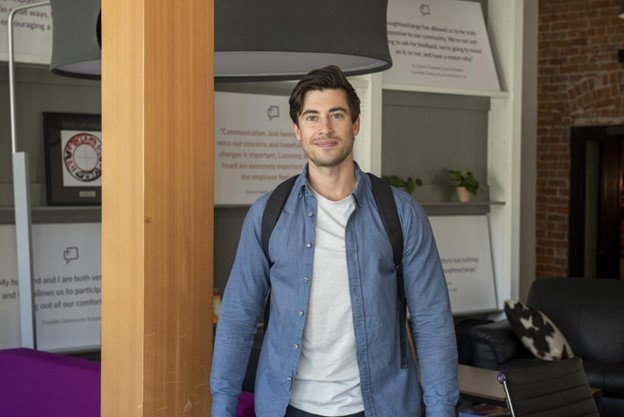
Like many from smaller communities, Chris Derochie was eager to leave his hometown after graduating from high school. Seeking a larger centre, he left Rossland and landed in Michigan, where he played college hockey and obtained a Bachelor of Business Administration. While there, he also discovered his passion for working with tech startups, and after realizing the Lower Columbia has its own burgeoning technology industry—with an especially interesting company headquartered in Rossland—his interest was piqued. Thoughtexchange was arming leaders with data from their communities to help inform large decisions and solve problems, and the company looked poised for rapid growth. Today, Chris represents Thoughtexchange as an Account Manager on their Education Team. He feels privileged to be back in the Kootenays, where he enthusiastically indulges in the mountain lifestyle he grew up loving. He’s proud to contribute to a company that gives young people a voice in decision-making and helps educational leaders make positive change in their communities. Chris is also involved in the Capstone Project, a collaborative venture between Metal Tech Alley-affiliated companies and School District 20 that links Grade 12 students to work experience with local innovative companies that support a balanced lifestyle. It’s no surprise that Chris’ clients are receptive to his contagious smile and sunny outlook, as he continues to excel at bringing people together in the educational sector.
What does Thoughtexchange specialize in, and how do you contribute?
It’s a crowdsourcing platform that leaders and/or organizations can use to give their stakeholders a voice in making decisions that affect them. It’s a really powerful way to understand the thoughts and sentiments of a group ranging from five people to 50,000 people, with insights generated in real-time. Where it’s really different from your traditional sort of engagement is that people are able to actually share what’s in their hearts and minds in their own words—in an exchange of thoughts. There are no confines like those that are inherent to a survey or something of that nature. Through the prioritization of thoughts that happen in the star step, which is one of the three steps within the exchange process—share, star, and discover—participants can see what other people are saying. That creates a space to generate learning and build empathy. In many cases, perspectives evolve as people are exposed to others’ thoughts. From a leadership standpoint, you’re getting a very crisp understanding of what the group’s priorities are, so you can make more thoughtful decisions.
As an account manager, I monitor what’s going on within our accounts to make sure that we’re up to speed on any exchanges and answer any questions our partners have about running exchanges. It’s a fair bit of checking in with senior leadership at the district level, and also checking news, because with the nature of school districts most everything important happening is in the local news. On our Zoom calls, we mostly coach our partners through ideas and share suggestions. We’ve attracted quite a unique subset of the education community; a lot of the people we work with are very like-minded, and we get along extremely well.
Why is it important for school districts to use Thoughtexchange?
Right now, it’s especially important because of COVID-19; districts are tasked with a really challenging prospect: safely bringing kids back to school. They’re making really high-impact decisions that have a lot of emotion tied to them. Ultimately it has a pretty huge effect on the whole community: families, staff, and kids as well. Getting an understanding of what’s important and what matters to everyone is vital. Everyone’s feelings about new education models and deliveries are valid, and there’s obviously a lot of weighing on the surrounding decisions. By using Thoughtexchange to source ideas and better understand sentiments, pain points, concerns, and fears, leaders in education are able to make decisions that are more inclusive and more considerate of the stakeholders’ priorities. What that generally looks like is supporting the operations—the more logistical pieces—and also the emotional and social well-being part. For example, a district may use an exchange to help figure out what students—and families and teachers—need to feel safe and supported in a remote education situation.
We’re always blown away by how thoughtful and articulate the input is in every single student engagement. It’s excellent to give the students the opportunity to share their voices, but an exchange is also a commitment from the schools to their students. It helps accelerate decision-making and encourages implementing changes based on the results. Plus, I think diverse groups and perspectives inherently lead to better decisions; it’s just smarter. Bringing in a variety of different thought processes, ways of thinking, and backgrounds helps support people’s ideas and the ways they process information. I also think it’s a little dated to think that decisions can or should be made by a single person or a small group of people, especially when those decisions affect such a variety of stakeholders. Inviting and reviewing thoughts from a wider range of people allows for groups to not only be smarter and more efficient, but for the process to be more fair and equitable.
Do you have an example of work you’re particularly proud of since you’ve been with Thoughtexchange?
What comes to mind immediately is working in education and being part of the conversation happening right now around equality and equal opportunity. Two years ago we were working with a New York school district with a demographic that was primarily Caucasian and middle-class, but that also had a minority of African American students. This was following the Parkland shootings, so the district board decided to enhance the feeling of safety and security for staff and students by bringing armed police into the school for regular walk-throughs. Immediately after starting this, the superintendent started to hear some rumblings—amongst the Black students in particular—that the practice was causing discomfort. It totally makes sense, given some experiences Black people across their country—and ours—have had with police.
So the superintendent wisely ran an exchange, asking for people’s thoughts and feelings about the new practice; what rose to the top were the perspectives from Black students in particular: the walk-throughs made them feel uncomfortable. Again, that goes back to the generational trauma that’s been cultivated around their relationship with police. The primarily white school was therefore exposed to those perspectives and the idea that an experience for a Black student is quite different than that for a white student. It really helped create empathy across the district. Ideas were being shared that wouldn’t have normally come to light in a more traditional conversation, and especially not in an engagement where there’s no interaction, like a survey. And in addition to some really powerful learning, dialogue, and empathy-building across different groups, it led to the superintendent changing the police walk-through practice.
How did Thoughtexchange pivot during COVID-19?
Near the beginning of the pandemic, we opened up our software to any organization or group that wanted to connect with their stakeholders on the topic of COVID-19. That, in combination with us being well-positioned to help districts and organizations make important decisions remotely, meant our usage went up over 600 percent from the middle of February through to August. It brought on a number of new clients and really helped us to develop our thinking and identify the needs of organizations and districts. We’re proud to offer a platform like Thoughtexchange that allows for a variety of stakeholders to provide really meaningful feedback to help our clients navigate something so unprecedented.
We’ve also added a couple of super exciting product features in the last couple of months that help make our platform better and more usable, especially in light of more and more people being remote and more meetings and gatherings happening in remote settings. That’s been big for us. We’ve been strengthening our commitment to being a conduit for ideas and approaches and cultivating a community of thought leaders.

What attracted you to working for Thoughtexchange and what keeps you committed now?
I grew up here in Rossland. I was back east—I went to Adrian College in Michigan to study business and was living and working there—but I was really just looking for a way to come back to the Kootenays. For me, all of the things that I really love to do are here: being outdoors, biking, skiing, and enjoying the mountains. The community aspect that many of the towns in this region have is really important to me and something I didn’t quite find back east.
Three years ago Thoughtexchange was less than a hundred employees; now we’re well on our way to 200. When I joined the company, it had a kind of hidden-gem-startup feel, which was where my experience was up to that point. So it was basically those two major factors: it was a really neat-looking company that was poised to grow quickly, and it was located in Rossland.
It’s such a privilege to be doing work that has such a positive impact; it means a lot to support organizations and districts that are ultimately on the front lines of providing education and serving kids. That mission is really important to me. And then the other thing that keeps me committed is our team. They’ve done a wonderful job of building a super unique, diverse, thoughtful, fun team; coming to work and getting to interact with these people every day is a real joy.
How did you get to where you are today with Thoughtexchange? Was it a strategic move?
I knew I wanted to work in some sort of dynamic business environment, but in terms of getting into tech and startups, that happened without a ton of intentionality on my part. I got connected with a couple of entrepreneurs at college, and I started interning and then working full-time at their digital analytics company, Oopgo. We gave companies and websites insights that were orders of magnitude more in-depth than what you could get from just tracking clicks and interactions on your page through something like Google AdWords. Much like Thoughtexchange, the process provided insight for clients to make better decisions.
As for Thoughtexchange, it had elements that I enjoyed— like the startup environment and a relatively small team—but also it looked like it had a fair bit more structure. It also offered me an opportunity to learn from really well-established people who had a lot of experience growing businesses from relatively early on in their growth phase.
As someone originally from the area who’s fairly recently returned, what do you see happening here in the next five-to-ten years?
I definitely see co-working spaces becoming more popular as individuals continue to relocate here and the number of remote workers increases. I think the companies that are already here in the Kootenays, like Thoughtexchange, Traction on Demand, and a few other ones in Nelson and elsewhere, are showing that having a headquarters in a small, rural town is more than feasible. Demonstrating that a remotely distributed workforce can work and that companies can still grow super quickly lays a foundation. It definitely has more people flocking to this area to get access to all the recreational stuff—plus get away from some of the challenges that come with living in the big city. I think we’re all noticing the increase in people moving here, even in the last six months, and it feels like that’s only poised to keep going.
Along with the growing number of remote workers and companies. I think we’ll see an increase in community diversity too, which is awesome. When I was growing up, I didn’t really think there would be opportunities like this here, so staying wasn’t on my radar. Our options were either work at the school district, the hospital, or in another traditional industry. There definitely didn’t seem to be a ton of diversity in the job options, but that has changed. Now that I’ve integrated into the regional tech community, I’m not surprised the industry’s growing here.


Collaborative projects like Capstone are also opening up further opportunities for young people to build their careers here, which will definitely have an impact on the future business landscape. We’re working with Stanley Humphries Secondary in Castlegar to place 25 Grade 12 students in job shadowing or internship positions this semester. This will be the initial trial to gauge interest from students and the ability of companies like Thoughtexchange to provide meaningful opportunities as part of their senior capstone/work experience; we’re hoping to expand from there. I want young people to be aware that there are great and diverse opportunities available in this area; they don’t necessarily need to go to Vancouver or Calgary or Toronto to find meaningful, inspiring work. You can have it all here!
Interested in learning more about Thoughtexchange? Visit thoughtexchange.com
https://youtu.be/YvfI926WOjs

Innovating Economy Through Tech: Jason Taylor – Chair / Lead Researcher, Selkirk Technology Access Centre.
Digital arts professional Jason Taylor felt a new sense of intrigue and purpose when he held his animated character in his hand for the first time. That tangible moment of experiencing a design leap from concept to physical model spurred his career at Selkirk College into some radical shifts, and before long he was hooked on deeply investigating advanced manufacturing. Jason has been a respected and beloved instructor and researcher in Applied Research and Innovation at Selkirk College for over 20 years. He’s dedicated to growing the circular economy in Metal Tech Alley and acts as a mentor to many business people in the community, many of whom learned how to use technology under his guidance at the MIDAS Lab turned Selkirk Technology Access Centre (STAC). As Chair and Lead Researcher at STAC, Jason helps industry professionals optimize their operations by investigating and recommending solutions. While supporting professionals from design to manufacturing, Jason has discovered a need for digital fabrication and design specialists and is now filling that void by offering a new program at the college. Jason is hands-on and in the middle of a connected network of professionals as he helps promote and grow the region as an area his kids can learn, work, and live in. He attributes his great lifestyle to the people he surrounds himself with: his family, lifelong friends, and industry partners who have generously supported his ideas. It’s never work when you get to play, innovate, and learn from other professionals who are equally excited about technology’s future.
As STAC’s Chair and Lead Researcher In Advanced Manufacturing, can you tell us more about the new suite of services designed to build competitiveness in research and development?
Absolutely; Selkirk College took over ownership of the former MIDAS (Metallurgical Industrial Development Acceleration Studies) Lab, previously managed by KAST (Kootenay Association for Science and Technology) in April. The main goal of STAC is to help companies look toward the future of manufacturing. What we do is apply new technologies in workflows, help companies prototype new designs, or even come up with manufacturing processes, such as automating safety procedures. We use technical expertise and specialized equipment to advance product design and development through 3D printing and rapid prototyping, 3D scanning and reverse engineering, metrology, and customized advanced technology training; we also provide referrals to existing business services in the region.
I conduct research and work directly with companies on providing solutions. Over the last two years, the college has been granted close to $4 million for research in advanced manufacturing. In May, the Federal Government announced that Selkirk College was part of more than a dozen new technology access centres across the country. The STAC received $1.75 million in NSERC funding as part of the College & Community Innovation Program. This is in addition to the $2 million in federal funding secured last year to support productivity and innovation in advanced manufacturing companies.

How is STAC different from the former MIDAS lab?
STAC is more specialized in the equipment, rather than being somewhat of a generalist facility. We used to have a little bit of everything at the former MIDAS, but now we have staff on site that are ready to help industry and are truly specialists. Specifically, I have a tool and die maker, a machinist, a designer, and then myself—I do a little bit of everything. We have new metrology equipment here as well, which is high-end equipment for the science of measurement. It’s not only for 3D scanning, which we had before; it has a much higher level of tolerance and precision.
Are some industries already benefiting from using STAC?
Absolutely. The pandemic has had some fairly traumatic effects on industry; a lot of industries in BC—tourism, for example—saw a huge downturn. However, there are also huge opportunities. A lot of the smart people that are working in affected industries spent time at home thinking about how they’re going to do something new. We’ve seen a huge increase in industries and companies looking for help bringing new ideas to the market. So we’re busy! We have four really cool manufacturing process projects that will probably be completed at the prototype stage by late September. We’re doing several cannabis industry projects, a project focusing on the outdoor sports industry, and one for the fishing industry. It’s been amazing, and those aren’t even a part of our bigger, longer-term research projects.
Well before COVID-19, engineering firms utilized our staff and our facilities quite a bit; that’s been awesome, and having reciprocal access to their skill sets has been a great resource for us as well. Austin Engineering, for example, initially used our technology and resources to create dam models they hydraulically and seismically tested. We helped I/O Design & Engineering move into VR and augmented reality, which they took to another level. Redwood Engineering is currently looking at the 3D scanning and reverse engineering services we provide. We’re also working with Teck, Celgar, and Fortis—all the big players—but what really excites me is the smaller companies in the region that are doing mind-blowing things. There’s a company outside of Nelson called Twente that has a massive 3D printer that’s printing concrete; they’re building retaining walls and stairs and already have half a building 3D printed—it’s unbelievable!

Can you describe a pivotal moment in your career?
There have been several moments in several careers. As a computer animator, getting hired on with the animation studio Mainframe and working on a project called ReBoot in the early 90s was a big one. Then there was getting hired by Selkirk College and given several million dollars to start the Digital Arts and New Media program 20-some-odd years ago. Helping build the MIDAS lab five years ago was such an amazing moment, too. The forethought or insight into what’s possible from the team at KAST at that time—people like Erin Handy, Amber Hayes—was a game changer. The college allowing me to be part of the early decision-making process was a huge opportunity. I was asked to provide insight in regards to some of the equipment, software, programming, and access to the building. I also helped install and commission a lot of the equipment and machines at the very beginning, which was a great opportunity to learn and then share my knowledge.
I’ve always been very fortunate to be surrounded by really smart people; we share learnings and ideas and methodology and workflows all the time. I have incredible bosses, Rhys Andrews (Vice President, Education) on the academic side and Terri Macdonald (Director of Applied Research and Innovation) on the research side—she is amazing. Everyone talks about lifestyle—and I think lifestyle is a part of it—but really it comes down to the people. When I was a kid, I couldn’t wait to get out; now I definitely like to visit Vancouver or other bigger centers, but I can’t wait to get back home. There are just some really amazing people that I work with every day, and how generous the industry partners are to the community is really key for me. I don’t work, I come here to play every day. When you’re learning and you don’t know that you’re learning, it’s a pretty amazing thing.

How does your work in research and education contribute to community retention?
It’s all about how to keep really smart and talented people here. I look back to growing up in Rossland, and like I said, everyone I grew up with left—we couldn’t wait to leave! But if there were programs or opportunities like there are now, there’s no way we would have left. It’s a no-brainer when you have access to a facility like STAC and can be trained in technologies and equipment that you never dreamed would be here. Like a 3D metal printer in Trail? Really?
I think I’ve been very lucky to be able to focus my energy on what I see as very worthy causes. Pitching ideas that I knew were going to help this community, and primarily students in this area, has led to amazing opportunities. At the college we’re paid to keep up with professional development, which is a huge asset for me. When we’re looking at new technologies and programming without a lot of available training, we’ve been fortunate to be able to create it. That’s why we’re starting a new Digital Fabrication & Design program in September; there aren’t many programs like it worldwide.
Over the life of MIDAS and now STAC what we’ve seen is the need for these jobs, and for these trained people to provide industry partners with a very, very specific skill set. A lot of time challenges arise between an engineer’s design and a company’s manufacturing, so this new program really takes the opportunity to make somebody that’s the in-between, someone that understands design and fabrication and can help alleviate a lot of those bottlenecks. By offering education in this fast-growing field, we’re developing young professionals here as well as attracting others to the region.
How did your work pivot during the pandemic? And what kind of long-term impact do you think COVID-19 will have on education?
Right from the beginning, the college was deemed an essential service, so we were mandated to help in any way we could. While that was probably a little difficult for a math instructor, we had a fantastic lab at our disposal. At that time, we only had one student on-site so there were literally only three of us in that first month when everything was shut down. We sent the equipment home with our staff and student. We were lucky to hook up with the team at Austin Innovation to help make face shields and other medical and PPE equipment. So that was a good start to at least keep us busy! After that first month, we were able to set up protocols and procedures so we could safely come into the lab as well as work remotely.
The impact of COVID-19 on education is being felt across the province and the country already, primarily due to a significant drop in international students. That will be a big impact for us. But teachers and students are very quickly finding new ways to learn and to share their ideas. Having a program completely go online in one week was amazing. It was amazing that the college IT department could handle that and roll it out. It wasn’t perfect, but if somebody asked me 10 years ago or even five years ago if it was an option, I would have said no; but they did it!
There is still a lot of learning to do, but I live with that every day; in rapid prototyping, it’s all about does it look perfect? No. Did it work? Yes. Then while we’re testing it or making iterative design changes, we have a chance to perfect it. But it doesn’t have to be perfect to start. It sounds bad, but it’s really all about failure, and whether you can take the failure and learn from it and make it better. You know life is all a bunch of (hopefully) small failures and trying to get past those and just keep going and learning. That’s what we do here every day.

How will further technological advances impact the economy?
Well a big one here is having a trained, highly skilled workforce. Now that workers are getting paid more, they’re wanting to be at work rather than having the “it’s just a job” mentality. There are new opportunities in manufacturing, too; things that are currently manufactured in China are being moved to local manufacturing processes. That cuts down on transportation, hires more local people, and often produces a higher quality product. At some point the almighty dollar takes over, but getting away from that and making it more like the almighty person or community is a goal for me. It would be amazing to be able to produce and manufacture essential goods and services locally, and not rely so much on shipping and transportation.
Our job here at STAC is offloading initial startup costs, like those associated with bleeding-edge technology. Getting equipment and testing it out to see if it’s really what you need costs hundreds and hundreds of thousands of dollars, but if we can facilitate that, and we’re supported by provincial and federal government research funding, we can help with the leg work. We help companies like XL Quality Industrial Services, for example, by providing digital fabrication services and training while they support larger fabrication services the STAC cannot handle. Testing for the right technology for businesses to invest in is going to help with hiring more trained people and reducing manufacturing costs. That’s what we’re here for: to do the initial heavy lifting.
Visit STAC:


Leading Business Engagement: Erika Krest – Executive Director, Trail & District Chamber of Commerce
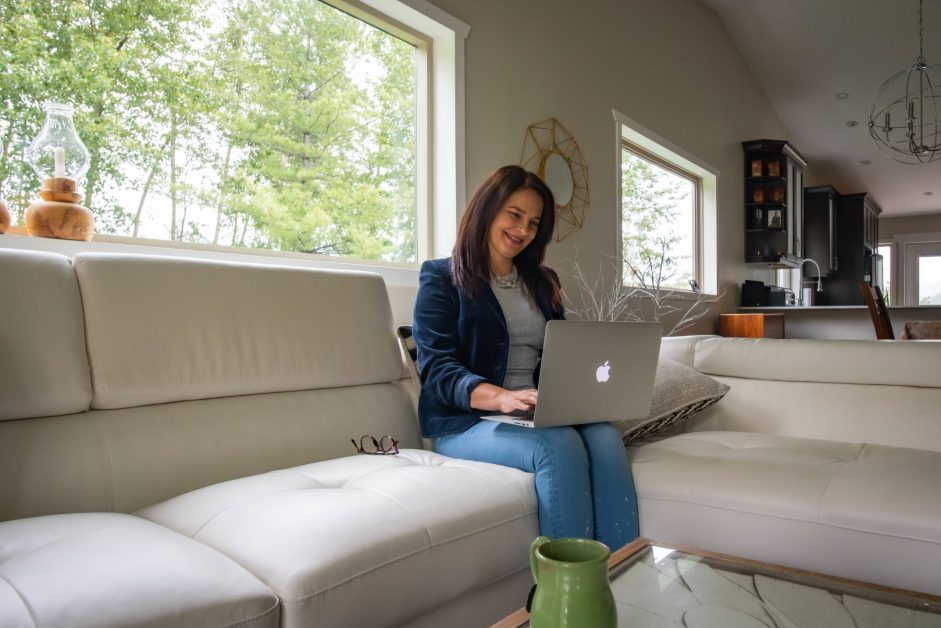
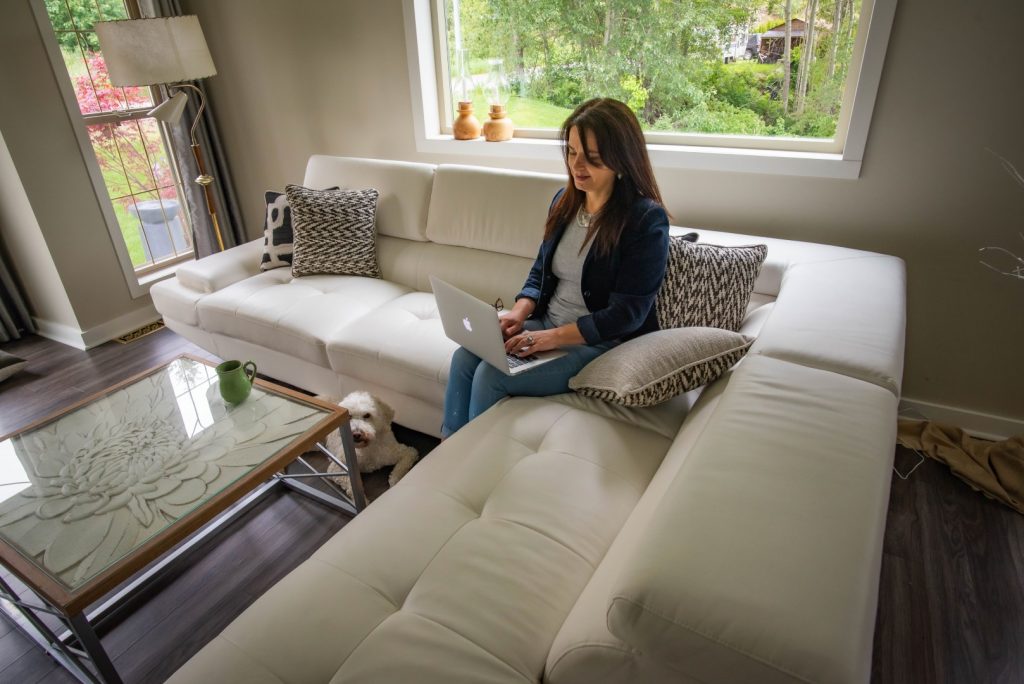
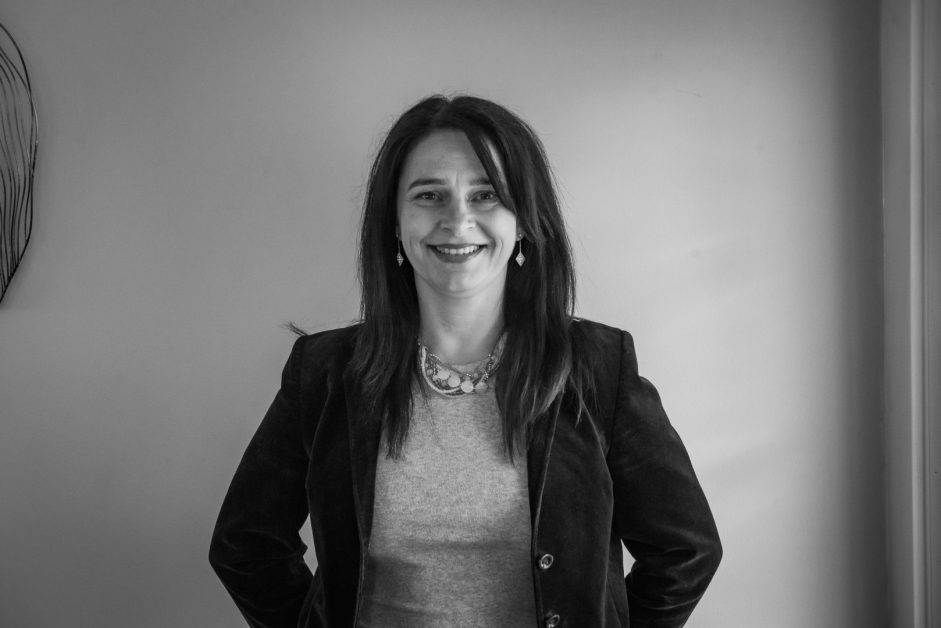
Encouraging a regional mindset is a priority for Erika Krest in her role as the Executive Director for the Trail & District Chamber of Commerce. Erika has spent the last 20 years fostering community as a dedicated volunteer, mother, and business owner. Originally from Hungary, she counts her experiences as essential to her early years as a new Canadian citizen. When opportunity literally knocked on the door of her reflexology business a few years ago, Erika met it with a “why not?” attitude. After learning more about the business network’s economic impact and advocacy work, she continued to say yes to opportunities that came her way via the Chamber. However, this was not all by chance; Erika is fiercely committed to growing the Lower Columbia and its businesses, which is evident in her quick climb from board member to ED. With her daughter at university, Erika found herself with more time to pursue the next phase of her journey. She is now tapping into her toolkit of skills to navigate change with grace, lead with ease and assertiveness, and collectively connect regional players. As she works to provide a strong voice to advocate for the region’s growth and prosperity, she’s thankful for the support of her board of directors and the expert staff on her team. Erika is thriving in her role at the Chamber, an organization with a mandate to listen, engage, advocate, represent, and negotiate. She’s also extremely proud of the progress the Chamber is facilitating for business owners in Metal Tech Alley.
Tell us about your various roles in the business community.
As well as being the Executive Director of the Trail & District Chamber of Commerce, I own two small businesses. I run a reflexology clinic and my husband and I also started running an Airbnb called Jewel of the Kootenay’s Guest Suite just last year. The name of the game is branding, so I’m in the process of renaming my reflexology business, and last year I started an art scholarship with the same name. Our daughter is a dancer; she graduated from Steps Dance Centre and is now doing her BA at the University of Calgary. When she was applying for scholarships, I was stunned to see that furthering education in arts is not very supported in the Kootenays. I followed the centre’s lead – parents started a scholarship a few years back – and created a small scholarship to support artists.
When I got the ED role at the Chamber, I wasn’t ready to give up my reflexology business – partly because it feeds my new scholarship, and because reflexology has been a lifelong passion. As for the guest suite, we enjoy hosting people visiting the Kootenays to discover the recreation and beauty of the region.
Can you explain what the Chamber does for the community?
There are tiers to the Chamber’s role: we help young businesses – those under three years old – when they’re just starting out. Running a small business can be lonely sometimes, despite the sense of freedom. We help create a network for new members, as well as provide free resources and a promotional aspect, with Business After Business events and social media.
We also provide businesses with affordable extended health benefit packages, which is super important. Extended health packages can help attract employees and also encourage them to stay loyal to you. We all know how expensive it is to train an employee, so retention is super important.
For members who have been in business for a while – let’s say three-to-seven years – their needs change. They might be looking for second locations, to maximize income, or to become more involved in the community. We help these businesses with the resources, training, and soft skills they need to build their team.
For long-term members, 10+ year businesses; their drive is a success for their industry or profession, and their concerns may include rapid changes in technology and public perception, new regulations, and shrinking revenue streams. We’re a member of the BC Chamber of Commerce and because of that, we’re directly connected to the provincial and federal government – that’s where our high-level advocacy work comes in.
I’m still learning too, but the picture is getting clearer; I really hope that our message also becomes more clear. Our membership is on the rise, so I assume businesses are seeing the value in joining the Chamber; we’re an economic driving force in the community, and we’re pushing policies forward.
Since you started as ED with the Chamber last July, is there something you’re most proud of?
To be honest, I’m proud every day. I have a super board of directors and our staff is amazing. We’re working with people who really resonate with the organization and are true experts; for example, instead of hiring staff to do our social media, we hired a business that’s already an expert in that field. So rather than trying to train someone – and how? I’m not an expert in social media! – we contract that work out. I think it’s a big part of staying current and staying successful.
Recently, we pushed a competitive tax environment for credit unions, which are an important part of the Kootenay’s economic landscape. Fighting for something like that benefits everybody – not only our members, but everybody in our community. We’ve also helped to create a level playing field for BC breweries and distilleries, and because of that we now have breweries in the Kootenays. Our network makes us an economic driving force, and we’re working to send that message out to reach more people.
As for the very latest success, the Roundtable that we, Community Futures, and LCIC have come up with together to show unity is key. All three organizations are regional, so it’s super important for us to send the message to everyone that we are working on a regional level to benefit everybody. Right now we are working on #thinklocalfirst BINGO, a fun interactive way for people to learn about the Kootenays’ beautiful, colourful business network. The circumstances surrounding the COVID-19 pandemic provided us with an opportunity; we took advantage and ran with it.
Could you elaborate on COVID-19 initiatives like BINGO and the Roundtable?
Absolutely. We’re trying to support our restaurants and essential businesses with our social media push for #TakeOutWednesday; I think we’ve already reached 9,000+ people. We started with grocery stores, pharmacies, and health food stores, and now it’s restaurants, too.
We created BINGO to help businesses who aren’t easily categorized. On Facebook we tag the companies who are on the card and encourage cross-promotion. There are four ways to play the game, but the goal is to increase the number of people visiting participating businesses’ social media pages or websites.
With the South Kootenay COVID-19 Business Roundtable, we weren’t really sure how it was going to unfold, so we tested the waters to see how our business community was feeling. Everybody was in shock and had questions. So that became the goal: providing a platform for people to ask questions. Then once the questions came in, our job was to bring in experts who were able to answer those questions. We brought in MLA Katrina Conroy and MP Richard Canning, who answered provincial or federal questions. We had WorkSafeBC at the last meeting because our business community is anxious about how stores are operating and following the BC government’s rules and regulations. We brought in insurance experts to answer questions about home-based businesses or curbside pickup/delivery options. We also brought in RCMP to answer questions about the safety of downtown areas. Lastly, we created a closed Facebook group – South Kootenay Citizens on Patrol – in response to safety requests. The Roundtable may provide value moving forward, so even though it’s on pause for now, we’re planning to meet again once Phase 3 of the careful reopen plan is announced.
Where did your interest in business and policy come from?
I never cultivated it but I’ve always had a knack for business. I was an insurance broker in Hungary, and ran my own little business there. After moving to Canada and having a family, running a business wasn’t a priority for me anymore; having a family took over. Canada was brand new for me, too. Every country is different when it comes to learning business and rules and regulations, but it was very clear to me early on that the Kootenays was full of potential. After I raised my daughter, exploring that further was something I felt I had to do. I’m not sure that everybody understands; maybe it’s because I came from a different culture, but the support system that we have here in the Kootenays as far as growing your business is huge. Education is right here – Selkirk College was a huge part of my success. I love the area – the way it looks, the beauty of it, the nature of it – but the potential was something that really made me stay here. And this area is still super untapped; there’s just so much that we haven’t even looked into yet.
What made you lay down your roots in Canada and in this region?
I originally came to Canada for a six-week holiday to visit a guy I met in Hungary – his family is from the town next to where I grew up – and the rest is history, as the story goes for so many people who landed in the Kootenays. His grandparents actually immigrated to Alberta in the 1930s and started a farm and family. I met my husband when he came to visit Hungary for a wedding, and he invited me to Canada for a holiday. A year and a half later we came back, married and with a baby. I moved to Canada in 1998. We decided to build our family here, but we go back to Hungary often. It was very important for me to raise my daughter as a dual-cultured person. The family aspect of the Hungarian culture is very important for us, as is staying connected with history. I feel that to understand where you want to go, you really need to understand where you came from.
Since living in Canada I’ve learned so much; it’s just different from where I came from. Being so far away from my family I was kind of forced to grow up, but it would have never been possible without the wonderful people that I have met, including the amazing neighbors and friends who are still in my life 20 years later. It can be hard to build friendships as an adult, but we’re lucky to have many supportive people in our lives.
What has the COVID-19 pandemic taught the business community and how will we prevail?
I feel that it’s taught us to collaborate more closely, be more creative, learn to pivot, act more quickly, and reach out. Pivoting and connecting with your audience and with your customers is super important, because this time will pass and your customers will be back – until then, stay connected.
We’re doing biweekly surveys to gauge the health of our business community in conjunction with the BC Chamber and the MindReader™ platform. The first survey, released in mid-March, projected that up to 40% of small businesses would not survive the pandemic. I really hope that some of the businesses who thought that they wouldn’t make it were able to reach out, pivot, and stay connected, and that hopefully that number is not as high anymore. One of my taglines is “tough times don’t last forever, but tough people do.”
What do you see happening in Metal Tech Alley in the next five years?
I see it continuing to grow. Now we have this generation of college students who are super interested in the technology that a lot of the Metal Tech Alley businesses offer. I really hope more of our young people will stay in this area because it provides jobs for them, or provides the platform to become entrepreneurs in connected fields.
I’m fascinated by Rossland’s history. It was just a small gold mine town that grew to a population of 7,000, and then somebody saw the potential to create a smelter. Metal processing is a huge anchor in this area, and it’s incredible how we just keep on growing; so many old gold mining towns are ghost towns. It’s fascinating to me that our community is able to pivot, invest in ideas, and stay strong. We have over 900 small businesses from Fruitvale to Rossland – and collectively they’re the largest employers in this area. Small business owners are the backbone of our community and should be incredibly proud of themselves.
https://youtu.be/A9eNdXyvfxA

Circular Economy Role Model: Pete Stamper – General Manager, KC Recycling
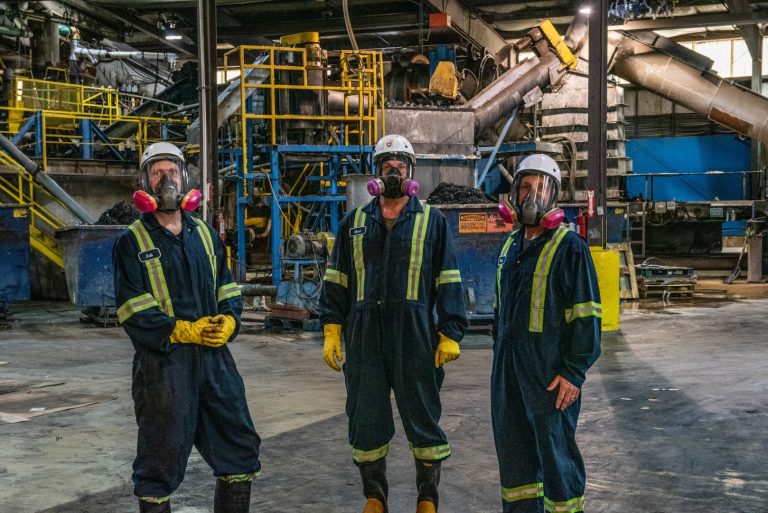
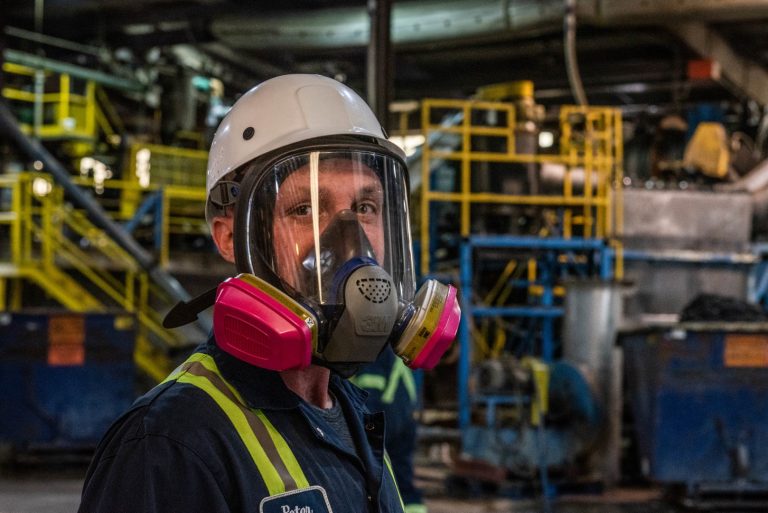
Pete Stamper traded in his business suit for coveralls and a respirator when he moved to the Lower Columbia from Seattle, WA to become KC Recycling’s General Manager (GM).
The primed professional is comfortable working at ground level operations, especially excelling at leading global manufacturing companies through ownership transitions and turnarounds. Last March, Stamper was brought onboard as part-owner and GM of the industrial operation. With a track record that boasts successfully deploying the Toyota Production System operating principles and lean manufacturing, Stamper is already implementing a system with components designed for achieving higher quality, lower costs, more efficiency, and happier people. His experience stretches across multiple industries worldwide, including medical, automotive, aerospace, and many other sectors. Through all of this, his focus has been on small businesses that have a manufacturing component. KC Recycling has grown from humble beginnings in 1977 to become the largest lead-acid battery recycler in the Pacific Northwest. Stamper is finding his new line of work meaningful in many ways – from employing 70 people in the region and contributing to the economy, to aiming for the highest safety and environmental standards. He sees lead recycling in North America as a big success story, and KC Recycling as a considerable player in that field. Drawn to the company’s unique position in the Northwest and the partnership KC has with Teck, Stamper is scaling the recycling industry, making better choices for the environment, and growing the circular economy right here in Metal Tech Alley.
Tell us about KC Recycling.
We recycle hazardous materials; there are three different parts to that. The first is car batteries; a battery contains lead, acid, and plastic, so we separate it into three products and then move those to places that further recycle them.
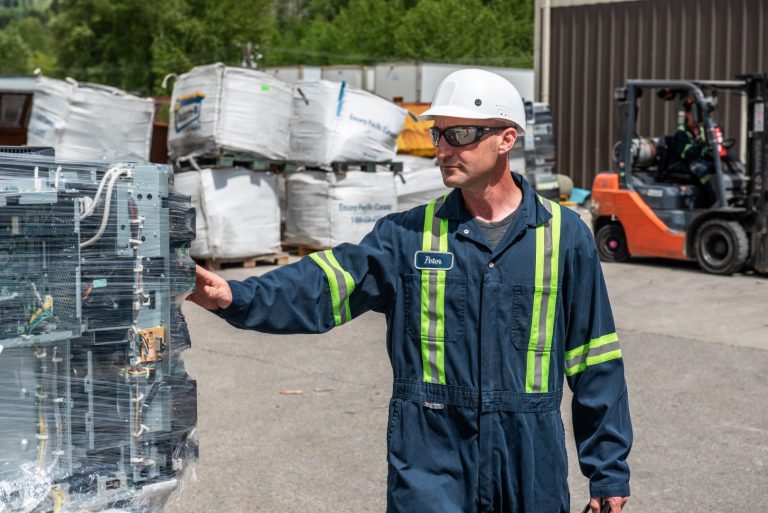
The second part is the electronic scraps. Have you ever taken old electronics - like DVD players, TVs, or phones - to a collection site like Best Buy or a bottle depot? A quarter of British Columbia's electronic scrap comes to us and we take it apart. We remove the hazardous materials - some things have mercury in them or batteries that could explode or contaminate - and we dispose of them correctly. We separate the stuff that's valuable, like plastic and metals and circuit boards, and send to other recyclers to process.
The third part is CRT (cathode-ray tube) glass, like from old TV sets. Old TV sets give off radiation, so they actually have lead in the glass to protect the people using them. We take the CRT glass, grind it up, and then send it with the lead. The lead is extracted to be reused in batteries.
I understand you process CRT glass for all of North America - is that correct? Do you specialize in anything else?
Right now we process CRT glass for all of Canada and the Northwest. Anyone who does electronic scrap recycling in Canada sends us the glass. Historically we were the facility for Western Canada and the American Pacific Northwest, but when the smelter in Belledune, New Brunswick closed down late last year much of the material that was going there from Ontario and Quebec was redirected to us. So we doubled our production overnight; truckloads of glass just started showing up.
As for another specialty, from a geographic standpoint, we’re the only battery recycler in the West of North America, except for one facility in Los Angeles. Even though automotive batteries are a strongly recycled product - there's a lot of recycling capacity in the East and in Mexico, for example - there are no other battery breakers in the West. What we do involves a lot of specialized knowledge and equipment. It’s called battery breaking because it requires physically breaking batteries into their components and sorting it all. This side of the continent has grown a lot faster than anywhere else, which means more batteries to recycle, so what we do is in very high demand. It’s hard, dealing with hazardous materials like lead and acid while respecting health and environmental concerns, but that’s probably our number one specialty.
Why is Metal Tech Alley or the Lower Columbia an ideal location for KC?
Here in Trail and the surrounding area, there’s real competency around dealing with lead and other hazardous materials. Everyone has their own equipment and knows how to do it safely, so nobody’s intimidated by hazardous material - fundamentally that’s unique here.
The proximity to Teck is really beneficial, too. They’re a big producer and consumer of products. And another unique thing about our location is the rail line. There's only a couple of places where the rail crosses from Canada to the U.S., and one of them is here. Lead is heavy and best suited to ship by rail.
Can you explain how KC Recycling demonstrates a circular economy?
Sure - let's talk about automotive batteries, since that process is a great role model for a circular economy. Automotive batteries contain lead, which is important to recycle for two reasons: one, it's valuable, and two, it's hazardous. The industry evolved to develop a process by which the batteries come back to the manufacturers. Whenever you buy a car battery, you’re charged an extra $15 if you don't give back the dead battery you’re replacing. It’s called a core charge. It makes sure batteries are getting exchanged, and it pays for the batteries to go all the way back through the circular economy.
We work with a US-based battery manufacturer; they get the lead for their batteries from Teck, and Teck gets the lead from us. We extract that lead from the dead batteries that came from the manufacturer. Literally, there are rail cars of dead batteries coming to us from across the border. We take them apart, send the lead to Teck, they put it through the smelter to make it high-grade and send it back to the manufacturer, and it just continues that way. The manufacturer sends their batteries to different retail distributors, and when they sell a shipment of batteries, they get back a shipment of dead batteries, which make their way to us. That's fantastic, right? That's how it should work. Ninety-nine per cent of the lead in North America is recycled; almost none of it is lost. But not everything is valuable and not everything is hazardous, so when you don't have those factors, the infrastructure to drive this type of circular process isn’t there.
I’d like to say that it will happen across other industries, but it certainly requires a functioning public policy system to go beyond valuable products. For example, it’s very common to talk about building this process into plastics. We actually deal with recycled plastics; battery casings are a valuable plastic, but they still don’t go back to the battery manufacturers because it’s not quite valuable enough. We take the plastic, we clean it, we grind it up into a sellable product, and we sell it to another plastic recycler who blends it with other plastics to make another new plastic and sell it again. But with the right policies and systems in place, we could theoretically make everything circular. As it stands now, even the battery acid isn't circular; the acid we extract goes to Teck, and they turn it into another product, such as fertilizer - so it’s being reused, but it doesn't go back to the battery manufacturer with the lead. Wouldn't it be nice if a rail car of lead was followed by a rail car of acid, and one of plastic?
These are solvable problems. It's just that the economics alone don't drive it. As a community we have to want to make it happen. We have to put the regulations and incentives in place to make it work, and once it’s set up, it can work very well - we’ve proven that with lead. I was recently asked to join the LCIC board to offer my perspective on the circular economy, as KC Recycling is one of the largest recyclers in the area. I’m passionate about small business and believe that the Lower Columbia is a fantastic place to build a business. The remoteness of our region presents some unique challenges, and I look forward to partnering with other business leaders to collectively address these.
What inspired you to leave Seattle and come work for KC in this type of environment?
Aside from doing something meaningful with an impactful company, and putting aside the adjustment of working with lead - that was new to me - it was a massive business opportunity. If you look at the export of spent use lead-acid batteries in America and Canada, there didn’t used to be any, until about four years ago - and now every year it increases. We're in a geography where there's the least capacity for the amount of spent batteries created. So there’s the opportunity to grow KC Recycling - the only place in the Northwest to recycle those batteries - and also do something really important, which is capture that lead, keep it here, and do the circular economy thing. People built this circular process years ago, and then it started to fall apart because we haven't built the recycling capacity to keep up with the growth of our lead-acid battery production. In the future I’d love to see KC Recycling capturing all the batteries that used to leave the Pacific Northwest ports for Asia.
And one other personal thing inspired my move here: lifestyle. I used to spend every weekend in the mountains at our cabin near Seattle; our family skied all winter and went mountaineering all summer. So the opportunity to come to live in the mountains instead of only going there on the weekends was incredible. My wife is from Alaska, so she feels at home in the snow, my daughter is on the Red Mountain Racers, and my son is a great skier, too. We also have a bike “problem” - like most people in Rossland - and we do a lot of climbing, hiking, camping, and canoeing.
Lifestyles have changed globally during COVID-19. How has KC Recycling pivoted during the new conditions?
KC Recycling is a required essential business and easily adapted to address COVID concerns. Due to the nature of the work, hygiene and safety has always been a part of what we do; all employees already use respirators, coveralls, and gloves daily. Additionally, to allow physical distancing in break rooms and changing rooms, we’ve staggered start times and break times. We also provided all employees with disposable masks to use at home to help keep themselves and their families safe. We all feel very fortunate to have the opportunity to step up and serve our community, with safety as our top priority.
With operations running smoothly and the business growing, what is KC Recycling hoping to achieve in the next five years?
There are a number of things; we actually just rolled out our company mission and values. The first is that we are recognized as the best place to work in the Kootenays. I heard a rumour that our reputation wasn’t the greatest, and I like a challenge! I know we can do it. It's a great company that does great stuff, and if we keep going I’m sure we’ll be one of the best. The second is that I expect safety to be something that's automatic in everyone's mind; I want to set the industry safety standard. We had some high-level visitors from a huge company the other day, and one of the superintendents complimented us three times on our amazingly clean and safe operation. That felt good; it means we’re making progress and changing our reputation. Third, we want to become more significant in the circular economy. Whether that’s increasing battery recycling capacity in the Northwest or going after other materials, we need to increase and grow our processing ability.
https://www.youtube.com/watch?v=RmSnMF7zf0M

Sustainable Expertise: Morag Carter – Executive Director, the Skills Centre
Morag Carter views her life through an environmental lens. The Scotland native and citizen of the world moved to the Lower Columbia two years ago to experience the Canadian mountains. She cites coming face-to-face with a moose in the wetlands as a breathtaking moment that made her fall even more in love with the Kootenay region. Morag’s passion for the environment flows into her work as the Executive Director at the Skills Centre in Trail. While the non-profit organization provides employment development services for community members, its other mandate is to develop economic and social development strategies focused on areas like affordable housing and community inclusion. Connecting with locals to discover what they needed to succeed has been a constructive strategy for Morag, and has already driven change and created opportunities. But her work doesn’t stop there; she’s thinking about the big picture and leading a critical dialogue on sustainability. With the visible effects of climate change sweeping the planet, Morag is convinced it’s time to see the issue as greater than an environmental threat that shrinks glaciers. She’s devoted to investigating the implications climate change has on community economic development. Morag’s over 25 years of experience as an environmentalist has spanned the globe and had her working for brilliant minds and important organizations. Fascinated by the natural environment and its direct correlation with the economy, Morag is confident her role at the Skills Centre presents the perfect ground in which to root this study and grow solutions that flourish.
Tell us about the Skills Centre.
is a non-profit that provides free workforce and workplace training and development strategies. We offer all sorts of core employment and skills training programs. These are funded by a variety of levels of government, by philanthropic donations, or by funders like the Columbia Basin Trust (CBT). As part of our work we also focus on community economic and social development strategies. We think the social development piece is a really important part of what we do for the community — my predecessor Jan Morton was responsible for leading the development of a regional poverty reduction strategy. It’s currently in action in the Lower Columbia.
I should mention we also have a for-profit business called Inside Job Consulting (IJC), through which we provide HR support for local workplaces. We also support wellness programming at various sites throughout the Kootenays.
Some people may not understand how involved the Skills Centre is in social and economic development; could you expand on that?
Of course. The poverty reduction strategy for the Lower Columbia is called Thriving for All. Jan (the former executive director) led the development of that process, but it didn’t come entirely out of the Skills Centre. It was a community-driven process developed by about 70 participants, including people from business and local councils, plus 11 people who were living in poverty or had experienced poverty. Thriving for All has five elements. The big one is affordable housing, which is desperately needed in the community; then there’s food security, social health and community services, learning and development, and a vibrant and inclusive economy. We have a variety of initiatives already in action and are working on more, but the overall theme is community inclusion. When we started planning actions, it was immediately important to make sure that people were getting connected to the services they needed, so we trained three cohorts of navigators in Trail to assist people with accessing services that are often split amongst different agencies. To tackle affordable housing, Jan set up a new not-for-profit called the Lower Columbia Affordable Housing Society. With some funding assistance from CBT it’s been developing new affordable housing across the Lower Columbia. We also periodically run community kitchens at the Knox United Church in Trail and at the Fruitvale Memorial Centre, and have started the process of trying to develop a common access card, which would allow people living at or below the living wage to access recreation services in the community. The hope is to eventually expand it to allow people to access reduced rates for the Trail arts and culture facilities, potentially transit, or any number of other locally available things.
Impressive! The majority of people know the Skills Centre for providing employment support services. Can you describe your clientele and how you approach helping them?
Absolutely. Our programs target three groups of people. The first is youth, so people between 18 – 24 but occasionally even up to 30. The three programs we’re currently running for them are a Mining and Industrial program, an Adventure Tourism program, and a Service and Tourism one. Then we’ve got programs for older workers, who are another vulnerable population; it’s a bit harder to get work when you’re over 55. We particularly gear these programs to areas with decent work vacancy rates to increase the chance of participants getting jobs afterwards. Participants receive specific training and certification in the field that they’re interested in, and are also taught a bunch of soft skills. Those include how to develop a resume, how to behave at work, interview skills, and other things that help them in the labour market. The final group that we’re currently running programs for is survivors of violence and abuse who, of course, have a range of other support they need in order to successfully transition back into the workforce.
How does the Skills Centre decide where to focus its energy?
When I first came onboard I interviewed businesses across the Lower Columbia to see what they thought about the work the Skills Centre was doing. They were all incredibly kind and said they were greatly indebted to the team for the prior work that had been done. But they also identified areas where they needed assistance or didn’t have their own internal capacities. It’s not a big surprise that a lot of businesses — especially smaller and medium-sized businesses — don’t have internal human resources support. That’s one area we found a way to help in, particularly through IJC. Businesses were also lacking the capacity to do their own strategic planning, which is another service that we provide: helping them plan how they are going to build, expand, and prosper in short to medium term timelines. We also talked to businesses about the skills they’d require in the near future, in part to help us plan what programs we’ll offer; we want to put programs in place that are the most useful for the business community in both the short and long-term. They help us build our programming, while our programming is hopefully helping them build their businesses.
Does the Skills Centre partner with other organizations for community initiatives?
Yes; one of the most important economic development organizations in town is the Lower Columbia Community Development Team Society (LCCDTS). It’s the umbrella body for the Lower Columbia Initiative Corporation, from which Metal Tech Alley is derived. We’re super proud to partner with them and regularly work with affiliated organizations. We’ve also recently been working with the West Kootenay Eco Society, Tourism Rossland, Seven Summits, KAST and the school district on some community events.
What about your professional background? How’d you get to where you are today?
I first visited Canada in 1989 before moving to Toronto in 1991. There I worked for a city councillor who was running for mayor; he didn’t win, but I stayed on with him afterwards, doing some climate work. Jack Layton, who went on to become the leader of the NDP, was a passionate environmentalist. He was wonderful to work for. He introduced me to a whole range of issues and a whole bunch of people in Toronto — particularly women — who were doing some fantastic, creative work around human health and the environment.
After that I went on to work for Greenpeace, focusing on chemical safety and human health. I did that for about 10 years through a variety of different organizations, and I became part of an international negotiating team for the UN convention on persistent organic pollutants. Later, while I was back in Europe and living in Amsterdam, I was headhunted by the David Suzuki Foundation to head up their climate piece, so it was back to climate and energy work for another decade.
I didn’t start out being a passionate environmentalist, but I’ve become one over the years. I began to see that climate change was actually more than just an environmental issue. Its implications for things like community economic development and poverty are really crucial, and they were kind of missing — and this is not a criticism of the environmental community — but they were missing from the conversation about the impacts of climate change. Wanting to explore that connection further eventually brought me to the Skills Centre. Trail in particular was attractive because it’s an area of the province where the natural environment and access to natural resources is a huge economic driver for the community. When you live in a beautiful place that you can see being impacted by climate change in multiple ways — including economically — it’s powerful. I’m very interested in being here, and I hope the conversation that we’re having around sustainability in the community informs how we develop a more sustainable economic future.
Was there anything else that appealed to you about moving to the area?
I’ve lived and worked all over the world and all over Canada, but I’d only been to the Kootenays once before I moved here. After a decade on the coast — which is beautiful, the ocean is compelling, and I absolutely adored it — one of the things that really appealed to me was the mountains. I thought I was pretty fit before I came here, but hiking the mountain trails has been humbling, and I appreciate that. But the thing I love most about the landscape here — I’m actually a bit ashamed to say this after a 25-year career as an environmentalist — is discovering the wetlands. I knew next to nothing about wetlands and I have absolutely adored wandering them through Slocan, around the Lower Columbia, and out toward Creston.
What do you see happening in Metal Tech Alley in the next five years?
Well, one of the things that we hear about Metal Tech Alley a lot — and from businesses outside the region — is amazement at the overall strategy. It speaks to the innovation that we’re trying to foster and support. There’s lots of really great work being done and really interesting businesses that are appearing as a result. But with some other things at play in our region, one of which is the carbon-intensive industries here, it’s important we figure out how to be supportive in a carbon-constrained world. It’s going to take some really creative thinking. When it comes down to it, it’s about ensuring we all have a really great quality of life.
The other thing I’d like to see us figure out is something we haven’t really talked about much: how gendered the labour market is in our region. The Skills Centre has done some really interesting work over the last five or six years to get women into non-traditional labour roles. I would love to see more programming that will help women get into regional jobs that pay really well.

The Perfect Retreat: Jesse Crockett – General Manager, The Josie Hotel
http://www.youtube.com/watch?v=H1hMgBlqb-Y
Luxury can mean so many things. For Jesse Crockett, valet help with his family’s six sets of skis upon first arrival at The Josie Hotel was a rich experience. He was refreshed by the level of customer service – and fresh pow – and before he could say, “concierge,” a new relationship formed. As The Josie’s General Manager, Jesse can’t complain about the stunning view from the new boutique hotel. The big experience the small establishment provides for all guests is impactful, offering a family-friendly environment that also handily serves as an upscale choice for locals looking to temporarily depart from their low-key lifestyle. The award-winning hotel, located in Metal Tech Alley, offers amenities like outdoor cedar saunas, ski valet, and a spa – not to mention The Velvet Restaurant & Lounge, where French-inspired cuisine is complemented with refreshing cocktails and paired with educated wine staff pouring B.C.’s finest grapes. The feast continues on the mountain slopes, where Red Mountain Resort delivers 3,850 acres of pristine skiing in an environment that is best described as “still keeping it real.” Locals only whisper "Red," but nothing this good can be kept a secret for long. After years of industry experience by way of SilverStar Mountain Resort and Vancouver’s Fairmont Waterfront Hotel, Jesse is excited to run The Josie at Red. His dream to become an adventure guide was redirected when he recognized he was accident-prone, and management seemed like a more attractive route. So it was down the Powder Highway to this newest venture, where it’s all about building a passionate team to help share the region with their guests and the world.
Tell me about your role as General Manager of The Josie Hotel.
I would say I’m the manager of fun! Ha! Seriously, though, we're a 106-room boutique-style hotel with all hospitality facets. We have our restaurant, The Velvet Restaurant & Lounge, as well as banquet space and ballroom, so I’m basically leading and connecting all of our different departments. Because we’re new, a big part of my job is driving the sales and marketing program to raise international awareness. It’s important to sell our hotel but also increase awareness of Red Mountain and Rossland in general.
I started here at the end of the first winter season, in April. The hotel opened in November of last year, so it’s only been open a year, but a lot has been accomplished. There have been a lot of awards, which has been nice. The World Ski Awards just named us the Best Ski Boutique Hotel in Canada, which is pretty exciting, and then USA Today named us the No. 2 best ski hotel in North America.
Congratulations, that is exciting! Can you tell me how The Josie provides a different experience than other hotels?
That's a great question. For us, offering a boutique style - which I love - is a big thing. It’s different from what else is on offer in the North American marketplace, especially in BC. You don’t find slope-side hotels like us at very many - if any - of the Interior ski resorts. There are a few boutique-type hotels in Whistler and major centres like Vail and Aspen, but those are the big players. When you find something the size and quality of Red Mountain with a hotel like ours there, it is very unique. The Josie is the first luxury hotel built at a ski resort in Canada in the last 10 years. Geographically and experientially that definitely makes us different.
Service-wise, we have all the luxury boutique services, including a ski concierge. When I came here for the first time with my family and my four kids, it was the greatest to be greeted by the guest services team at the entrance and have everything taken care of from that point on. They expertly handled all six pairs of my family’s skis and quickly got us into our rooms and onto the slopes; having that all taken care of when you’re off the beaten track is very unique!
Then there’s our restaurant, The Velvet. It's headed by Executive Chef Marc-Andre Choquette, who’s put together a French-influenced menu that’s tied to local farm-fresh ingredients. Fresh is absolutely the key tenet of the restaurant. The team works tirelessly to have the freshest ingredients and make everything from scratch; it provides a dining experience that you're not going to get in many places within the Kootenay region or Interior BC yet. I think we're putting ourselves up against the best restaurants in Canada, which is exciting.

I understand your parent company generally sets up in pretty world-renowned international locations. How’d they choose Rossland, and how is the hotel complementing the ski resort?
Noble House Hotels and Resorts manages the hotel. The ownership group really looked at this as a special place. They saw the potential in the community, the potential at Red Mountain, and the growing opportunities throughout the region. With the Spokane International Airport only two hours away it gives both our American and international friends direct access, too. We're in a growth phase here, and I think there's such strong potential for building a strong community and a strong resort. I think the biggest thing, and where it ties in so nice, is that it’s such a unique offering - it's different from the other resort accommodations. Red recently opened a new hostel, there are condos, and we’re the luxury boutique. Everything works together nicely for all different styles of guests.
With the season upon us, can you tell me what you're excited about?
I'm definitely excited for more snow, which is coming! It always comes. We’re excited to go into our second operating year with an eye for enhancement. We want to really enhance the whole experience, grow our events, and welcome more international guests. A big focus for us this year is creating a fun après environment at The Velvet and adding more music, as well as improving the lunch environment to really focus on offerings for the kids. We want to be a good option for a place to come with your family, especially after a day of skiing. And we’re going to continue presenting a real culinary experience, and highlighting the fantastic culinary team’s work with great Okanagan wines and wine events.
Also, Red’s new lift adds another 300 acres. The Topping Creek Chairlift is great, and I think it's really going to spread skiers across the mountain. It's definitely adding more beginner to intermediate terrain on the lower side of the mountain. I believe the addition also puts Red into a new category - top 10 in North America, size-wise.
What professional steps have you taken to get to where you are today?
I started out with a tourism management degree; originally I wanted to be in adventure tourism. I thought the greatest thing in the world would be to work as a raft and ski guide, but I finally came to the realization that I'm accident-prone, so maybe guiding wasn't the best choice. I did my adventure tourism training in Golden and Cranbrook, so I got to know the Kootenay/Rockies region. After hurting myself for the tenth time I realized I also liked the management part of my education, so decided to finish my business degree in Tourism. Coming out of school I was fortunate to have great opportunities; I worked at the Fairmont Waterfront Hotel in Vancouver, which was one of the best jobs I could’ve had to really understand the industry. Later I joined SilverStar as the Hotel Manager, and went from two to four hotels building their portfolio, which was also great. When you’re working for a single resort sole proprietor, learning how to watch your cost but provide a great experience is key, and we did that well. As my position grew, I also took over food and beverage and became their Hospitality Director. We renovated multiple restaurants and expanded on the different event offerings, including opening a spa and growing the wine festival. With the seasonality of a ski resort, finding ways to draw people during different parts of the year to drive business was so important. I’ve helped grow and change businesses in the hospitality industry on many sides, so it put me in a great place to move into the GM role here at The Josie.
Do you still take advantage of your environment and get out skiing?
Absolutely. Red is one of those mystical resorts. Everybody knows about it, but not everybody's been here yet. When I started considering this role I came out to see the area, see Rossland, see the resort. It was always somewhere I’d wanted to visit. Once the family and I started skiing the area we definitely fell in love. It was very quickly apparent that this place has everything anyone needs on the outdoor side. There’s the ski resort, which offers some of the best skiing in North America, and then there's biking, and hiking, and all the adventures you’d ever want. As I mentioned, I have four kids, and we bike and ski as a family. So with Rossland three minutes away from a ski resort, it certainly had huge appeal as a place to live.

Does The Josie partner or collaborate with any other businesses in the area?
Of course, we already have a great relationship with Red, and our success is their success. I sit on the Tourism Rossland board as well. There’s a huge opportunity for us to work together to share all this region has to offer. The board is made up of different stakeholders from the community, and it's a very productive group. Everyone works together to grow tourism that supports business 12 months a year. Tourism dollars generated by the MRDT tax – so taxed off of accommodators – go through the government and are paid to Tourism Rossland. So a hotel like ours, which is going to bring in so much extra revenue, will substantially increase the funding compared to previous years. That said, all accommodators need to look at how we expand our seasons. Winter will be successful with the ski hill in our favour, but how do we work together to grow? We need to draw awareness to how we’re a year-round destination to create sustainability for all the different types of businesses that are in this community.
Lastly, what do you see happening in the area in the next five years?
I think an increase in festivals and events in spring, summer, and fall to really draw in clientele and visitors to the area will be a big regional initiative. I think the direction we're going for is the entire community working together. And that ties in involving local art, culture, music, and culinary into the events and festivals we hope to help build. I think creating new experiences that all operators here can participate in will make the community thrive. Growing our wine events - like wine master dinners with certain wineries - is part of the plan. Making the Red Teeth Mountain Wine Festival into a longer and larger event and bringing in some different music components to round out what the hotel can offer is also on the table. I always like to look at bringing in music, culture, food, art, and all different kinds of things to grow events that appeal to different guests and clientele. We want to give something exciting and unique for locals and guests alike to experience at The Josie.
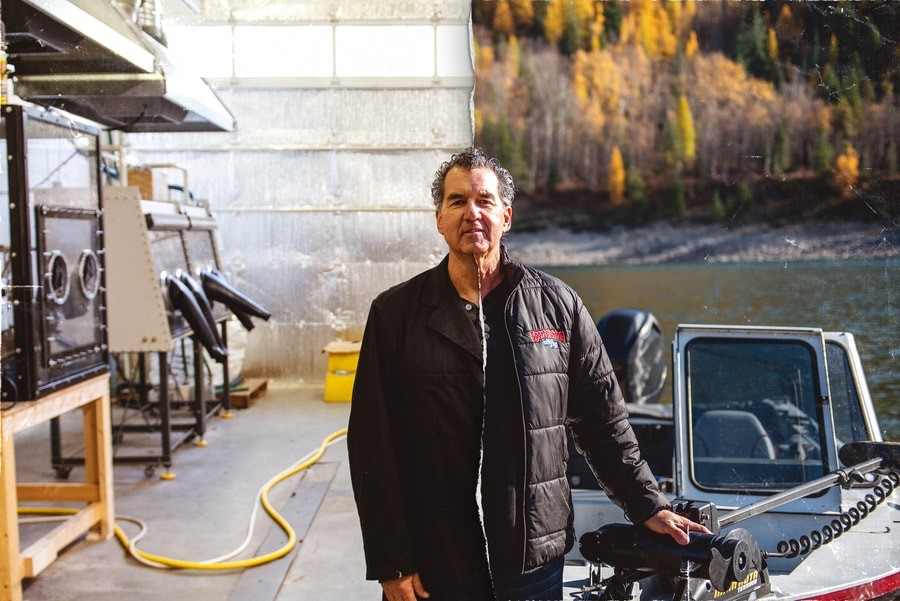
The Greatest Catch: Don Freschi – CEO, Fenix Advanced Materials and On the Fly Productions
http://www.youtube.com/watch?v=7U4E4joSk4U
Don Freschi is the entrepreneur who grasped the Metal Tech Alley concept early on. After beginning his chemical metallurgical career at Teck, Don started making semiconductors and high purity metals from Teck byproducts. There’s something very authentic about Don; whether you see him fishing on the Columbia River, in downtown Trail exiting the Community Futures office, or on a business trip to Hong Kong to make global connections, he always comes across as personable and sincere. He says the secret to staying on course is to have a top goal list and start aligning your decisions with it to make your wildest dreams come true. In 2015, Don launched Fenix Advanced Materials, an offshoot from Firebird Technologies that recently received a financial boost that will help position the company as a world leader in ultra-high purity metals. He makes sure to balance the hustle of starting up and growing companies with his stress-reducing fly-fishing hobby. Providing excellent technical career opportunities in the Lower Columbia region is a priority for Don, who is always looking out for the local economy. Retirement is a frame of mind, he says, joking that he’s on the “Freedom 95” plan. He intends to grow his company and a circular economy right here in the Kootenays, outlining a plan that eliminates waste and encourages the reuse of resources. After securing supplemental funding with the help of local organizations, Don is confident he can take another business to the next level.
What is Fenix Advanced Materials, and how did business start up?
Fenix is a clean technology company specializing in manufacturing ultra-high purity metals for things like solar energy and nuclear medicine. Essentially, we convert things that go into the ground as waste into value-added products that help save the world.
Working in the industry started way back in the early 90s for me; in 2015 my partners from my previous company, Firebird Technologies - Bill Micklethwaite and Mike Konkin - and I saw an opportunity to start something new. My non-compete with my previous employer 5N Plus had ended, so it was an open ball game. We decided to throw some money in and see if we could get into the ultra-high purity metals market.
As experts in semiconductors and ultra-high purity metals from our days at Teck Cominco and Firebird, we decided to change our aim and focus on just the ultra-high purity metals. The margins are good, and you don't need near the staff you do with a semiconductor company. So we're in the ultra-high purity business, or what they call “six nines to seven nines pure,” because it's 99.99999 percent pure.
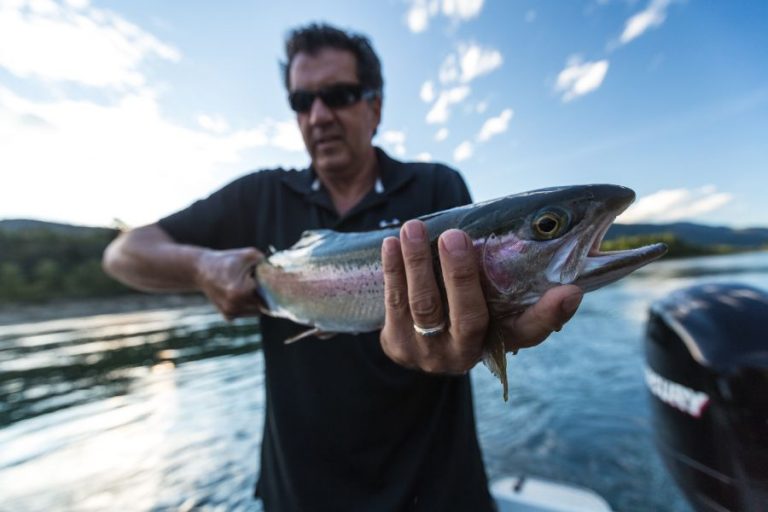
You have a long history in Trail, having worked for Teck before starting Firebird Technologies, which was later purchased by Quebec-based 5N Plus and moved to the U.S. Given the fact that you had the opportunity to start fresh, why did you choose to set up Fenix in Metal Tech Alley again?
It's all about the area, right? It's all about what we have here - and.we have everything we need. We've got our major raw material supplier right up the hill with Teck, which is a source for a lot of our starting products - things like indium, cadmium, tellurian and others. Teck produces them, but things like cadmium can be toxic, so they're called by-product metals. Taking out the impurities from those byproducts make them ultra-pure and ready to combine to form things like semiconductors.
This area also has skilled former employees of mine. It's just a perfect fit to bring everybody here. And of course, it's just the place you want to live. I've got world-class fishing, skiing, everything right out my back door. I've got all of what I call my de-stressing sports here - and they're affordable. There’s a world-class fly fishing river five minutes from my house, world-class skiing ten minutes up the road, world-class hiking and biking trails close by - you name it, we have it all.
I was born and raised in Trail, lived in Vancouver and Victoria while I went to school for seven years and worked there for five more before moving back. All of my companies are built around lifestyle, but family is No. 1, and my family's here, including my daughter, who is bringing my grandson up here.
Do you use the local business resources?
For sure. We started with equity investment, and we had to buy about half a million dollars of equipment, so of course we went to Community Futures of Greater Trail; they were instrumental in getting us the new equipment for our big expansion. They gave us a good lump sum to get going.
Right now we're increasing our product lines and diversifying our products, so value-adding. For example, we’re going from producing indium bars to indium wire, indium foil, cadmium shot, etc. - so we're changing the forms and making everything higher value. We raised over $1.5 million in financing for new product lines to really crank up Fenix. We went after some equity financing and debt, and invested close to $750,000 in equipment and another million dollars in labour. That's a lot of money to get that equipment in and hire 12 technical people over the next year. Columbia Basin Trust helped with that through their Impact Investment Fund; the biggest contributor was the NRC IRAP (National Research Council of Canada Industrial Research Assistance Program). The grant money is big because they'll cover 80% of labour you bring in.
We got one of the biggest, if not the biggest, contracts ever awarded to this area from NRC IRAP, which is pretty cool.
The funding is huge for our business. Obviously, as companies struggle trying to get from small product to product lines, and from $600,000 in revenues up to $3M, you always need that extra funding. We were fortunate to have the trust built already with local groups like Community Futures, Columbia Basin Trust, and NRC IRAP; we were able to leverage the money, put it together, and then crank it up.
What keeps you focused and committed to your industry, and how do you remain so relaxed?
It's actually the flexibility that keeps me focused. It's not about the money at all; obviously, we had a good exit back in 2009 with Firebird. It's about making sure we establish a company here that provides good employment - good technical employment - for people. I felt bad when we sold Firebird and they moved it to the States, and we felt obligated to set something up here again.
But one part has to complement the other - that's the big thing. With growing a start-up, there's the cash flow issues, trying to hire new staff - you've got some stressors there. So as long as I have the time to take the time, and find the time to de-stress, I’m good. I always seem to be able to relax very quickly. My main de-stressor is fishing.
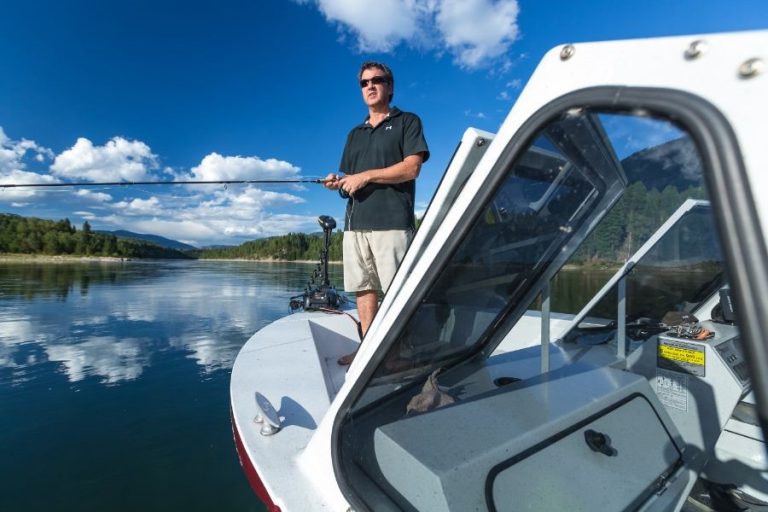
Fishing isn’t just a hobby, but also ties in with one of your other areas of professional focus. Could you touch on that?
Sure. One of my other companies, On The Fly Productions, produces the TV show Sport Fishing on the Fly. We book trips called On The Fly Adventures, too. Even though I've got a camera crew on-site, and we have to do post-production, fishing is still relaxing. It always puts a smile on my face and takes away all the stress.
On The Fly actually started when Grant Fines and I were partners in Firebird; we wanted a hobby and Grant was doing a bunch of volunteer video work for Shaw Cable. I was fly-fishing, and he offered to show me some video stuff if I showed him how to fish. He filmed me fly-fishing one time, and we gave it to Shaw; they liked it; they put it on the air, and then it just took off from there. Grant and I actually committed quite a bit of money - we put in about $100,000 in to start. Back in 1995 we signed with Outdoor Life Network down in the U.S., and now this year we're producing our 25th season. It airs all across North America and is now in Russia, New Zealand, and across Europe. The show really took off - it’s essentially worldwide.
I also have another company, Freschi Global Consulting, where I consult globally for semiconductors and consult with KAST under their Adventure Acceleration Program to help mentor younger companies and startups; I try to help them not make the mistakes that we all make as entrepreneurs. That side of things is important so we can establish more companies here in Metal Tech Alley.
Can you describe a pivotal moment in your career?
There have been a lot, but probably the biggest one was after we sold Firebird. There was a point where - well, I've always been a terrible employee; I know that I'm a bad employee, and that's why I've always had my own business. So what happened was I signed on to be the General Manager for 5N Plus as part of the buyout. Well, nearly three years into running the Trail plant, and with them doing nothing that we wanted them to do - our input went nowhere, and when you don't have any input, you don't have any say - that was a pivotal moment. I decided to give up the huge salary and just walk away. I had to get out of there, so that's what I did, even though people thought I was crazy for leaving.
Defining what makes you happy is important, and it just wasn’t making me happy. It should never be about the money; too many people put too much value on money. It'll stop you, it’ll hinder you, it can even kill you sometimes, because money can prevent people from moving forward. You gotta move forward, and it can't be all about the bucks.
What do you see happening in the local business sector over the next five years?
Well, what I'd love to see is no plan to ever sell Fenix. The goal will be to grow the company. I want Fenix to be at least the size Firebird was when we sold it - so 26-30 employees - and a world leader in ultra-high purity metals. I also want other companies here; at least one or two other companies using our products to build things here to contribute to a circular economy.
Basically, I’d love to have companies that we’re already dealing with - solar companies and semiconductor companies - set up right here in Metal Tech Alley. We take the products coming out of Teck, purify, improve, even combine them to get them ready for semiconductor growth, and these companies finish the product. Why wouldn't they want to do it all here? So that's our goal; in the next five years we want to bring these companies here to see the whole circular value chain. They’d produce their products and give their recycle back to Teck. Essentially we’d just keep reusing and reusing rather than digging up new material and putting it to waste. You've got to complete that circle, so the economy is full. Plus, the more value-adds, the more different products you can create, and the better circular economy you have.